




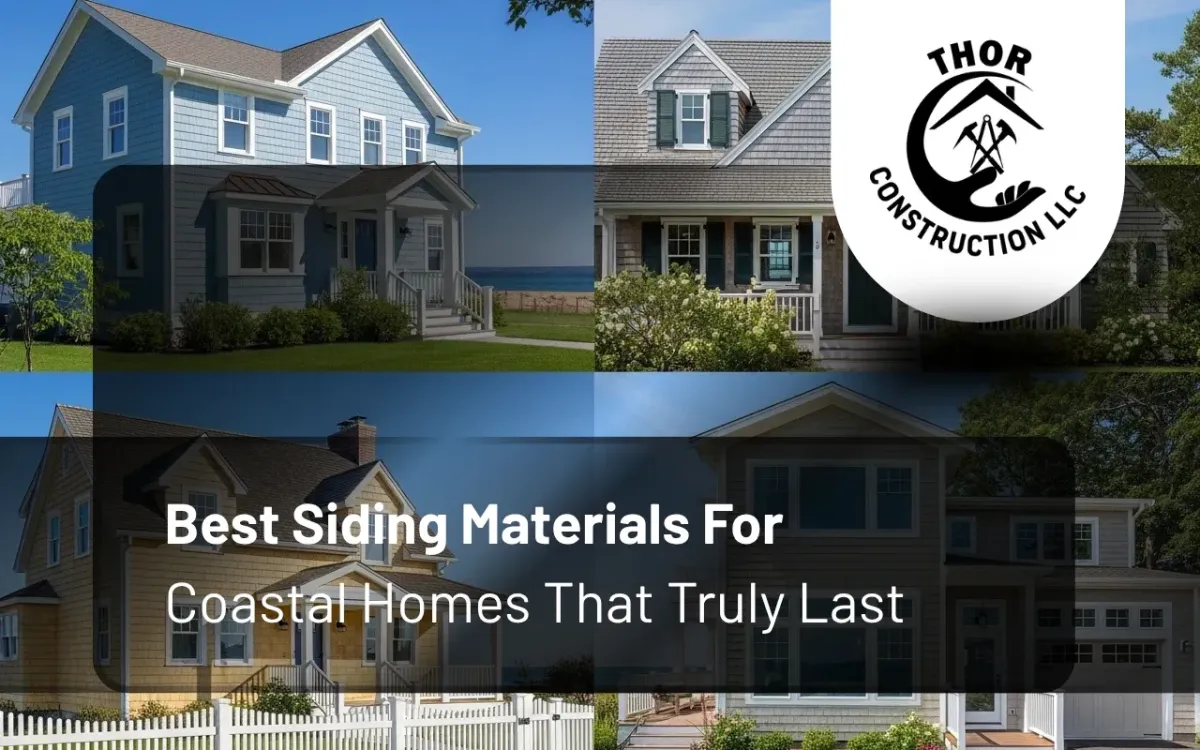
Best Siding Materials For Coastal Homes That Truly Last
Choosing the best siding materials for coastal homes is important when salt air, rain, humidity, and strong winds affect your property every year. Coastal living is beautiful, yet the wrong siding can lead to stains, cracks, swelling, and costly repairs.
At Thor Construction LLC, we guide homeowners toward siding choices that look good and stand strong. With the right exterior siding materials, your home can stay protected, fresh, and easier to maintain through changing seaside weather.
Coastal Siding Choices That Protect Your Home Longer
Coastal homes need siding that handles daily moisture, salty air, and bright sun. Standard products may fade, bend, or break down faster in these conditions. Therefore, choosing the best siding materials for coastal homes can help reduce damage and future repairs.
Better protection against rain, salt, and humidity.
Lower maintenance compared with weaker siding choices.
Stronger curb appeal that lasts through coastal weather.
Salt Air And Moisture Can Damage Weak Siding
Salt can stick to siding surfaces and slowly cause stains or wear. In addition, heavy moisture can lead to mold, rot, or swelling when the material is not made for wet areas.
That is why siding for wet climates must manage water well. It should also resist fading, warping, and cracking. As a result, your home stays safer and keeps its clean look longer.
Moisture Resistant Siding Options For Seaside Home Exteriors
Moisture resistant siding is a smart choice for homes near the coast. Fiber cement can give a wood-like look without the same risk of rot. PVC boards are also useful because they do not absorb water.
Fiber cement resists swelling, rot, and many moisture problems.
PVC boards help block water, mold, and mildew.
Proper sealing helps each material perform better over time.
Durable Materials That Resist Coastal Salt Corrosion
Some exterior siding materials handle salt better than others. Vinyl siding is easy to rinse, so salt buildup can be removed before it causes problems. Also, treated aluminum or steel panels can perform well when made for coastal use.
Synthetic options may also work for homes that need strength and style. With Thor Construction LLC, we look at your home’s exposure, design, and weather needs before helping you compare the best siding materials for coastal homes.
Style And Strength Can Work Together Beautifully
Durable siding does not have to look plain. Many modern products come in colors, textures, and finishes that fit coastal homes. For example, fiber cement can look like wood while offering better moisture protection.
In addition, some siding brands offer finishes made to resist fading. This helps your home look bright and cared for. The right balance gives you a strong exterior without giving up style.
Simple Maintenance Helps Coastal Siding Perform Better
Even strong siding needs basic care near the ocean. Salt, dirt, and mildew can build up over time. However, a simple cleaning plan can help protect your siding and keep your home looking its best.
Rinse siding with fresh water every few months.
Use mild soap and a soft brush for dirt.
Check seams, trim, and sealant at least once a year.
Frequently Asked Questions
What siding works best near salty ocean air?
Vinyl, fiber cement, PVC, and coated metal can work well near salty air. The best choice depends on your home, weather exposure, and design goals.
Is moisture resistant siding worth it for coastal homes?
Yes, moisture resistant siding helps reduce rot, swelling, mold, and water damage. It can also lower repair needs when installed correctly.
How often should coastal siding be cleaned?
Most coastal siding should be rinsed every three to six months. Homes closer to ocean spray may need cleaning more often.
Can siding for wet climates still look stylish?
Yes, siding for wet climates comes in many colors and textures. You can choose a strong product that still matches your home’s style.
Why does installation matter for coastal siding?
Good installation helps block wind-driven rain and salt from entering gaps. Proper flashing, sealing, and fasteners can extend siding life.
Professional Installation Supports Long Lasting Coastal Protection
The best siding materials for coastal homes need careful installation to perform well. Proper underlayment, flashing, sealant, and fasteners help stop water from getting behind the panels.
At Thor Construction LLC, we focus on clear guidance and dependable workmanship. Our team helps homeowners choose exterior siding materials that match their needs, protect their property, and support long-term value in coastal conditions.